Anna Maria Maugeri
Titoli dell'autore
Mutual recognition of freezing and confiscation orders
between efficiency and the rule of law - 2 tomi
editore: Pisa University Press
pagine: 1760
The handbook encompasses the results of the Project “RECOVER” (GA. n. 101091375), co-funded by the EU Justice Programme (2021-2027) and coordinated by Professor Anna Maria Maugeri (full Professor of Criminal Law at the University of Catania). It provides an in-depth analysis of the Regulation EU 2018/1805 (REG) on the mutual recognition of freezing and confiscation orders, reflecting the collaborative efforts of Prosecutors, Judicial and Asset Recovery Offices as well as Universities both in the 10 MSs which were the partners of RECOVER and in other EU MSs, which were indirectly involved in the project. RECOVER consisted of the following steps, which are reflected in the contents of the handbook: establishing the REG subject matter by clarifying the concept of “proceedings in criminal matters” (art. 1 REG); identifying the forms of freezing and confiscation orders covered by the REG in each MS (also in light of the impact of the new Directive 2024/1260), with the necessary safeguards; identifying the safeguards in the mutual recognition procedure; pointing out the main obstacles and legal issues in REG’s implementation and exchanging best practices; assessing the possibility of applying the REG to legal persons; focusing the legal and practical difficulties in asset recovery offices’activities; promoting the efficient management of frozen assets, protection of victims’ rights and social reuse of confiscated assets. The handbook provides for country reports, guidelines, policy recommendations and reform proposals aimed at fostering the implementation of the REG in compliance with the rule of law.
Mutual recognition of freezing and confiscation orders
between efficiency and the rule of law - 2 tomi
editore: Pisa University Press
pagine: 1760
The handbook encompasses the results of the Project “RECOVER” (GA. n. 101091375), co-funded by the EU Justice Programme (2021-2027) and coordinated by Professor Anna Maria Maugeri (full Professor of Criminal Law at the University of Catania). It provides an in-depth analysis of the Regulation EU 2018/1805 (REG) on the mutual recognition of freezing and confiscation orders, reflecting the collaborative efforts of Prosecutors, Judicial and Asset Recovery Offices as well as Universities both in the 10 MSs which were the partners of RECOVER and in other EU MSs, which were indirectly involved in the project. RECOVER consisted of the following steps, which are reflected in the contents of the handbook: establishing the REG subject matter by clarifying the concept of “proceedings in criminal matters” (art. 1 REG); identifying the forms of freezing and confiscation orders covered by the REG in each MS (also in light of the impact of the new Directive 2024/1260), with the necessary safeguards; identifying the safeguards in the mutual recognition procedure; pointing out the main obstacles and legal issues in REG’s implementation and exchanging best practices; assessing the possibility of applying the REG to legal persons; focusing the legal and practical difficulties in asset recovery offices’activities; promoting the efficient management of frozen assets, protection of victims’ rights and social reuse of confiscated assets. The handbook provides for country reports, guidelines, policy recommendations and reform proposals aimed at fostering the implementation of the REG in compliance with the rule of law.
Dall’Europa del populismo penale all’Europa dei diritti fondamentali
La riscoperta della funzione rieducativa come essenza riformatrice del sistema sanzionatorio
editore: Pisa University Press
pagine: 256
La presente collettanea è il risultato del progetto di ricerca EuRiPEn (Europa Rieducazione Pena Persone Enti) – coordinato dalla Prof.ssa Anna Maria Maugeri – nell’ambito del quale i docenti di diritto penale e processuale penale dell’Università di Catania hanno perseguito, con metodo interdisciplinare e comparatistico, un duplice obiettivo, culturale oltre che giuridico, ossia: ribaltare la visione populista spesso propagandata con riguardo all’Europa, ricostruendo il ruolo fondamentale della funzione rieducativa della pena nella legislazione e nella giurisprudenza europee nonché la sua influenza sugli Stati Membri; individuare best practices e formulare proposte di riforma dell’apparato sanzionatorio per le persone fisiche e giuridiche nonché meccanismi processuali di diversion.
Diritto penale dell'Unione Europea e nell'Unione Europea - Opera in due tomi
Studi in onore di Giovanni Grasso
editore: Pisa University Press
pagine: 724
I due volumi di cui si compone questa raccolta di Studi in onore di Giovanni Grasso accolgono contributi che indagano i significativi sviluppi registratisi, in particolare nell’ultimo quindicennio, relativamente alla materia penale, sia con riguardo all’azione dell’Unione in questo ambito (il “diritto penale dell’Unione europea”), sia con riguardo all’impatto che il processo di armonizzazione europea produce non solo su numerose fattispecie, ma anche sulla portata di principi generali e istituti del diritto penale nazionale (il “diritto penale nell’Unione europea”). Al diritto penale dell’Unione europea sono dedicati i contributi raccolti nel primo volume, suddiviso in due sezioni incentrate, rispettivamente, sui principi generali del diritto penale europeo e sugli importanti esiti dell’interlocuzione tra le Corti europee e la Corte costituzionale.Il secondo volume raccoglie una serie di contributi relativi all’impatto dell’armonizzazione europea sul diritto penale interno, e articolati in tre sezioni dedicate, rispettivamente, a principi e istituti, modelli di tipizzazione e tecniche di intervento, nonché al sistema sanzionatorio nella prospettiva multilevel.
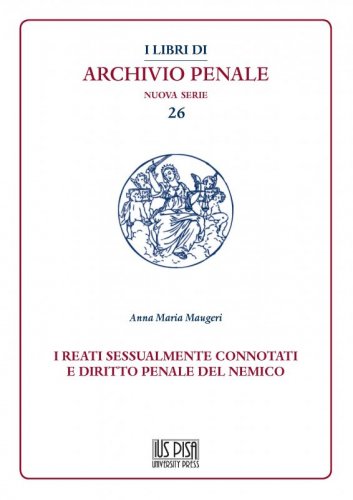
I reati sessualmente connotati e diritto penale del nemico
di Anna Maria Maugeri
editore: Pisa University Press
pagine: 284
Il volume analizza criticamente come nel settore dei reati sessualmente connotati – in particolare reati a tutela dei minori, sfruttamento della prostituzione, violenza sessuale e violenza di genere – si siano strumentalizzate le ansie punitive suscitate da crimini efferati per affermare politiche criminali securitarie e populiste, espressione di logiche proprie del diritto penale del nemico, con la connessa violazione dei principi penalistici di uno Stato di diritto: esasperate forme di anticipazione della tutela o fattispecie incentrate sul tipo d’autore; inasprimento punitivo e misure rivolte alla negazione del delinquente nemico e alla neutralizzazione della pericolosità - come misure di sicurezza (soprattutto custodiali e a tempo indeterminato), misure di prevenzione, le shaming sanctions, la registrazione, la castrazione-; l’ indebolimento della giurisdizione e delle sue garanzie.